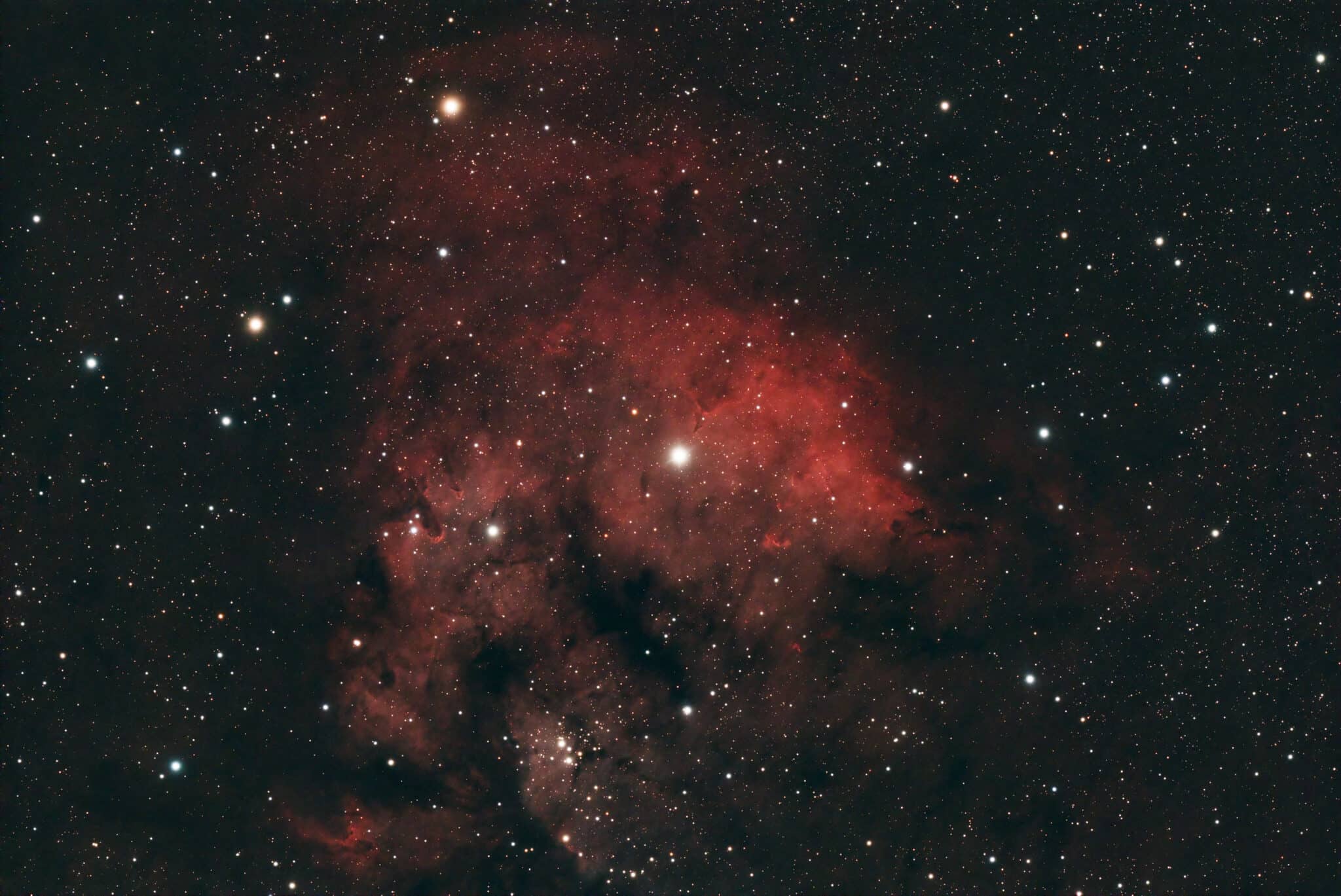
Last October, with Halloween approaching, I thought it fitting to capture something a bit whimsical: SH2-171, better known as the Teddy Bear Nebula, nestled within the larger NGC 7822 emission nebula complex in Cepheus.
What is the Teddy Bear Nebula?
SH2-171 is part of NGC 7822, a vast star-forming region located approximately 3,000 light-years away in the constellation Cepheus. The “Teddy Bear” nickname comes from the distinctive shape formed by bright emission regions and dark dust lanes that, with a bit of imagination, resemble a cosmic stuffed animal. This emission nebula glows primarily in hydrogen-alpha light as intense radiation from young, hot stars ionizes the surrounding gas, causing it to fluoresce in that characteristic deep red colour.
The region is a stellar nursery, where new stars are being born from collapsing clouds of gas and dust. The intricate pillars and cavities you can see in the image are carved out by powerful stellar winds from these newborn stars, similar to the processes that created the famous Pillars of Creation in the Eagle Nebula.
Why This Target is So Rewarding
The Teddy Bear Nebula is one of those targets that rewards patience and, crucially, dark skies. The subtle details in the dust lanes, the delicate wisps of hydrogen gas, and the colour variations throughout the nebula only really come alive when you’re imaging from a truly dark location. It’s also relatively large in the sky, making it a satisfying target for wide-field imaging.
I was discussing this image with a friend in Glasgow this morning, and he mentioned it would take him hours and hours to achieve the same signal-to-noise ratio that I captured in just 40 minutes of total exposure time. The difference? He’s battling Bortle 5-6 skies in the city, while here on Stoer, we enjoy pristine Bortle 1 conditions. You can read more about why our dark skies make such a difference for astrophotography and visual observing alike.
The Technical Details
This image comprises 20 frames of 120 seconds each, captured on the night of October 31st, 2025. My setup for this session was:
- Telescope: William Optics FLT132 – a beautifully corrected triplet refractor that delivers pinpoint stars across the frame
- Camera: ZWO ASI2600MC – a one-shot colour camera that makes capturing nebula relatively straightforward without the need for filter wheels
- Processing: Stacked in PixInsight with final touches in Lightroom
The total integration time of just 40 minutes demonstrates what’s possible when light pollution isn’t flooding your sensor with unwanted signal. In darker skies, each sub-exposure captures far more nebula detail and far less skyglow, meaning you need less total time to achieve a clean, detailed image.
Processing was fairly straightforward – background extraction to even out the field, careful stretching to bring out the fainter nebulosity without blowing out the bright cores, and some selective saturation adjustments to emphasize the colour variations between the red hydrogen-alpha regions and the bluer reflection nebulae scattered throughout.
Experience These Skies Yourself
The Stoer Peninsula offers some of the darkest skies accessible in the UK, and sharing these cosmic wonders – whether through photography or direct observation – never gets old.
If you’d like to experience these incredible dark skies for yourself, we offer bespoke astronomy events tailored to your interests, whether you’re a complete beginner or an experienced observer. We can arrange private observing sessions, astrophotography workshops, or simply a guided tour of the night sky that you’ll never forget.
For local residents and regular visitors to the area, don’t forget about the Assynt Astronomy Club, where we gather to share our passion for the cosmos, swap imaging tips, and make the most of our extraordinary natural resource – the pristine darkness above us.
Watch this space!
Leave a Reply